Table Of Content

“You’ve got these metal machines bouncing around on four bags of air we call tires in an urban environment where people are breaking the laws and not acting predictably,” he says. Of course, bureaucracy and politics could drive the whole thing right off the road. / Sign up for Verge Deals to get deals on products we've tested sent to your inbox weekly.
Our services
Unlike Cruise, Argo AI vehicles still had an employee in the front seat to monitor the trip. In March, she said the company was "confident" that Cruise would launch and commercialize operations "sooner than many people think." Cruise says it gave regulators the entire video immediately after the incident. But the DMV says it was only after requesting the footage that Cruise handed it over – 10 days later. After the fire truck collision, the California Department of Motor Vehicles told Cruise to reduce its fleet in half, to 150 cars, while it investigated the incident. "Our folks cannot be paying attention to an autonomous vehicle when we've got ladders to throw," San Francisco Fire Chief Jeanine Nicholson said in an August hearing.
Now in Phoenix
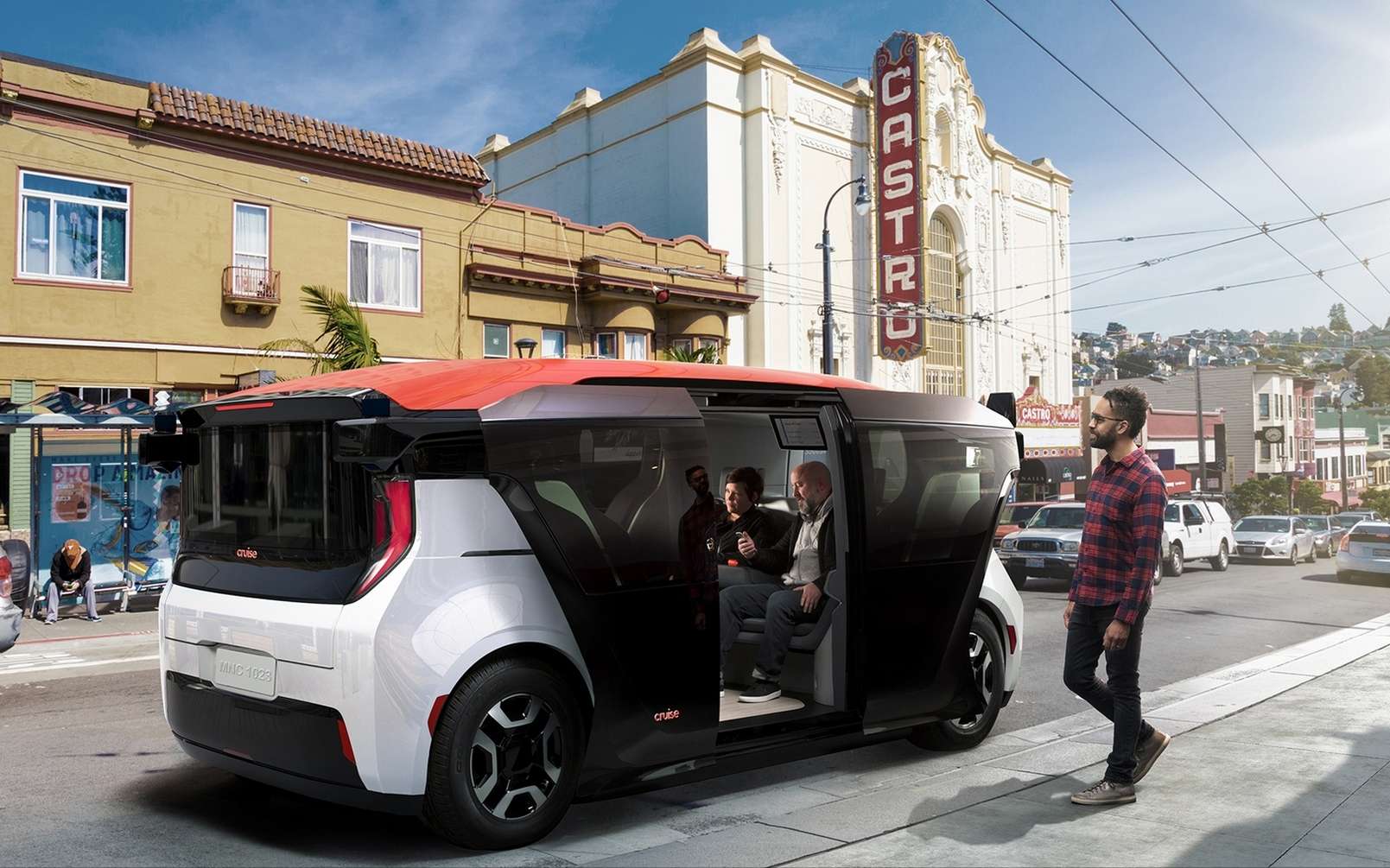
Meanwhile, Cruise handled the sensing and computing technologies, as well as the experience from the rider’s standpoint. For example, it doesn’t look like a toaster on wheels, as some autonomous “people movers” tend to do. Majority owned by General Motors since 2016, Cruise combines a culture of innovative technology and safety with a history of manufacturing and automotive excellence. Cruise has received funding from other leading companies and investors—including Honda, Microsoft, T. Rowe Price, and Walmart. Cruise ridehail services are not available at this time, but you can join the waitlist to be one of the first.
An Xbox VR headset is on the way, but it’s a ‘limited edition’ Meta Quest
The cars must also keep their speed under 30 miles per hour, and can’t operate in heavy rain or heavy fog. The deep learning that powers self-driving cars must learn to handle so-called edge cases, like a cat jumping out into a busy road. There’s also “the less glamorous work” required to make self-driving cars safe, Vogt says. Computers inside autonomous cars “can be like a laptop computer and just freeze up,” he says. If something goes wrong, the car must know how to detect the error and respond, like pulling over to the side of the road. Ford has said it will build an autonomous car without a steering wheel or pedals by 2021, while Waymo has begun offering a limited number of rides in fully driverless minivans to its customers in Phoenix, Arizona.
The GM-backed company is one of the first to launch Level 4 vehicles in a dense, complex urban setting
Initially, Cruise’s driverless autonomous offering will operate only between 10 p.m. But the limits are part of a plan by regulators and the company to prove out the safety and efficacy of its system before deploying it in more locations at additional times. The new operating window already extends its total active time by 1.5 hours as compared to the free driverless test pilot service it was offering between June of last year and the debut of this paid service. Cruise and Waymo also ran into problems with San Francisco's police and fire departments. At government hearings, the agencies testified that the driverless cars were a nuisance. Will include a variety of techniques as opposed to only deep learning, he believes.
Creating the AV Ecosystem

It initiated a third-party safety review of its robotaxis and hired an outside law firm to examine its response to the pedestrian incident. The National Highway Traffic Safety Administration also opened an investigation into Cruise. An activist group called Safe Street Rebel has been cataloging the incidents, which now clock in at more than 500. The group figured out that if they put orange traffic cones on the hoods of driverless cars, they would render the vehicles immobile.
California orders Cruise driverless cars off the roads because of safety concerns
The company had planned to launch a commercial taxi service in 2019 but failed to do so, and it has yet to publicly commit to a new date. Cruise will resume manual driving of its autonomous vehicles to create maps and gather road information in certain cities, starting with Phoenix, the company said Tuesday. The GM subsidiary already had a presence in Phoenix before it pulled its entire U.S.-based fleet last year following an incident in San Francisco that left a pedestrian stuck under and dragged by a Cruise robotaxi. For autonomous vehicle startup Cruise, the future isn't just about artificial intelligence. It's about machine learning, and that's why Cruise is teaching its electric vehicles to drive themselves in San Francisco — one of the most complicated urban environments for self-driving cars to operate in.
Ukraine is using the facial-recognition software sold by the controversial startup Clearview AI, the company’s CEO told Reuters. Clearview AI is giving Ukraine free access to its database of faces so officials can “vet people of interest at checkpoints,” the report said. The company said that it has gathered 2 billion photos from the Russian social media service VKontakte to help power its facial-recognition software.
G.M.'s Cruise Moved Fast in the Driverless Race. It Got Ugly. - The New York Times
G.M.'s Cruise Moved Fast in the Driverless Race. It Got Ugly..
Posted: Fri, 03 Nov 2023 07:00:00 GMT [source]
GM submitted a petition for permission to deploy a fully driverless Chevy Bolt in 2018, but it has yet to receive a response. And it will most likely need another exemption before the Origin is allowed to hit the road, too. Even so, Cruise isn’t the first company to build and test a self-driving car without traditional controls. In December 2016, Google stunned the world when it revealed that it had put a blind man in one of its egg-shaped autonomous test vehicles and sent him out for a short ride around Austin, Texas. Google’s Firefly vehicle, audaciously designed by YooJung Ahn, is widely considered to be the first car tested publicly without a steering wheel or pedals. The vehicle’s lack of traditional human controls means that Cruise needs an exemption from the federal government’s motor vehicle safety standards, which require vehicles to have a steering wheel and pedals.
The comments come a day after Reuters reported Cruise and rival Waymo have applied for permits needed to eventually start charging for rides and delivery using autonomous vehicles in San Francisco. Neither company revealed when they intend to launch services, according to the report. Cruise will continue its work on driverless cars as a commercial product, says spokesperson Navideh Forghani. She added that the company's approach is "with safety as our north star." GM's spokesperson says it remains committed to Cruise "as they refocus on trust, accountability and transparency." The company recalled and grounded all of its cars nationwide – nearly 1,000 vehicles.
The result is a ride that’s safe, efficient, and natural-looking to other drivers. In Texas, autonomous vehicles are regulated under a law passed in 2017 that allows vehicles to operate without a driver inside, although prior to that no law prohibited autonomous vehicles. There’s always a balance between healthy regulatory scrutiny and the innovation we desperately need to save lives, which is why we’ll continue to fully cooperate with NHTSA or any regulator in achieving that shared goal." This past weekend, the two cities became the first outside of the company’s home base in San Francisco where its rideshare services are available. In Austin, the service is open to passengers in central parts of the city and downtown, but plans call for it to be expanded over time. San Francisco-based Cruise, which is owned by General Motors, is now offering a fully autonomous rideshare service in Austin with no human drivers or monitors.
Ultimately, however, he prefers the term “driverless” when referring to fully-autonomous cars. Cruise is certainly one of the best capitalized autonomous vehicle companies in the world. In 2018, it secured both a $2.25 billion investment from the SoftBank Vision Fund and a $2 billion investment from Honda. In 2019, Cruise landed a $1.15 billion investment from GM, SoftBank, Honda, and T.
It has been operating an employee ride-hailing service with a current fleet of autonomous vehicles in San Francisco for several years. Despite public angst over autonomous vehicles, California state regulators voted to allow the companies to expand their robotaxi services in August. That prompted the city of San Francisco to file motions with the state demanding a halt to the expansion. A year ago, the future seemed bright for the driverless car startup Cruise.
The company declined to comment on a time frame for a public launch, however Ammann sounded bullish on such operations beginning with the Bolt vehicles before the Origin goes into production. The time frame given for the vehicle is the most detailed yet and also hints at when the commercial operation of Cruise's current autonomous vehicle test fleet is expected to start. "To be clear, human drivers will text, they'll be distracted. There's the saying, 'the lights are on, but nobody's home,'" Koopman says. Our goal is to earn trust and build partnerships with the communities such that, ultimately, we resume fully driverless operations in collaboration with a city.
Researchers from Collaborations Pharmaceuticals, King’s College London, and the Swiss institute Spiez Laboratory, published a paper in Nature about how the same A.I. Used to power drug discovery can be used for nefarious purposes like developing new biochemical weapons. The paper explains how easy it would be for researchers to use machine learning to design chemical warfare agents, which “should serve as a wake-up call for our colleagues in the ‘AI in drug discovery’ community.
Looking to the next chapter, our goal is to resume driverless operations. As we continue working to rebuild trust and determine the city where we will scale driverless, we also remain focused on continuing to improve our performance and overall safety approach. To that end, Cruise is resuming manual driving to create maps and gather road information in select cities, starting in Phoenix. This work is done using human-driven vehicles without autonomous systems engaged, and is a critical step for validating our self-driving systems as we work towards returning to our driverless mission.


No comments:
Post a Comment